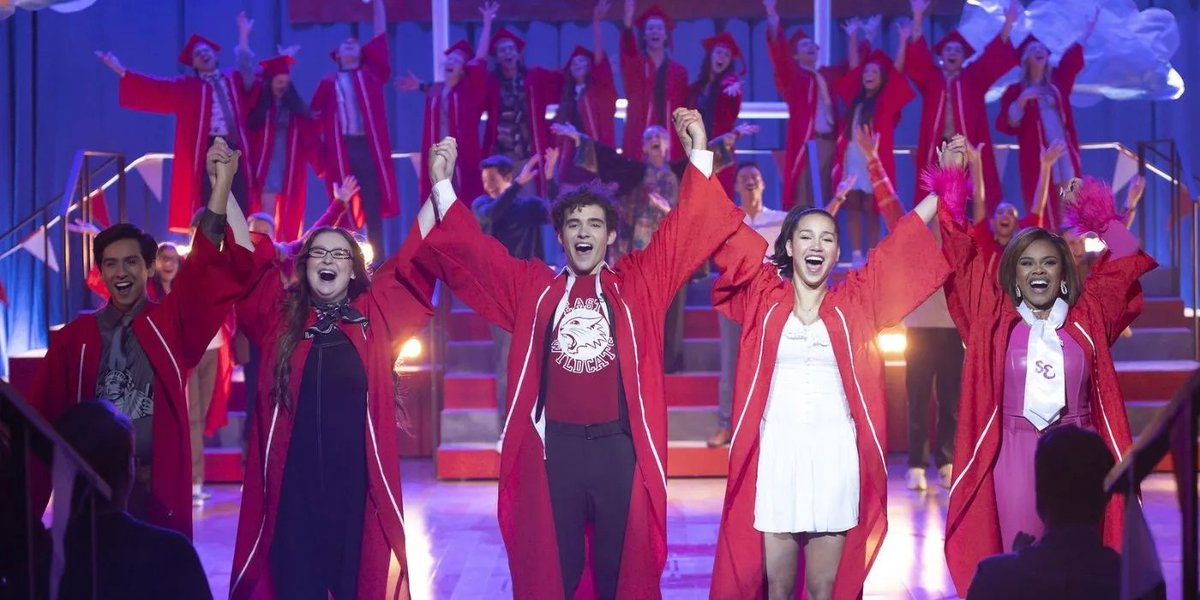
The first strum of "Start of Something New" hit differently for an entire generation. High School Musical wasn't just a movie; it was a cultural phenomenon that cemented itself in the hearts of millions. We cheered for Troy and Gabriella, gasped at Sharpay's theatrics, and felt the rhythm of East High's hallways. But behind the perfectly choreographed numbers and earnest high school drama lies a fascinating industry secret: the Real Ages of the High School Musical Cast Members often differed significantly from the teenage characters they portrayed.
It's a common Hollywood practice that often surprises fans, revealing a gap between the fresh-faced juniors on screen and the seasoned actors bringing them to life. This isn't a flaw in the film's magic, but rather a testament to the talent of the cast and the clever mechanics of filmmaking.
At a Glance: High School Musical's Age Reveal
- Juniors on Screen: Most core characters (Troy, Gabriella, Sharpay, Ryan, Chad, Taylor, Kelsi) were depicted as high school juniors, typically 16 or 17 years old.
- Older Than You Think: Many lead actors were in their late teens or early twenties during filming.
- The Youngest: Corbin Bleu (Chad Danforth) was the only core cast member who was actually 16, matching his character's assumed age.
- The Oldest: Monique Coleman (Taylor McKessie) was 25, nearly a decade older than her character, making her the oldest of the main ensemble.
- Why the Discrepancy? Industry factors like child labor laws, actor experience, and the demands of filming musicals often lead to casting older actors in younger roles.
The Wildcat Juniors: Who Played Whom (and How Old They Really Were)
When High School Musical first premiered in 2006, it captured the quintessential American high school experience. The main characters were juniors at East High, navigating basketball, scholastic decathlons, and, of course, the drama club. Their on-screen ages hovered around 16 or 17. Let’s pull back the curtain and see how old the actors really were when they became Wildcats.
Troy Bolton (Character Age: 16-17)
Played by the charismatic Zac Efron, Troy Bolton was the basketball team captain with a secret passion for singing. Efron brought a natural charm and athletic prowess to the role, making Troy an instant teen heartthrob.
- Zac Efron's Real Age During Filming: 18 years old.
While only a year or two older than his character, Efron’s slightly greater maturity helped anchor the role with a believable blend of boyish enthusiasm and emerging leadership. If you're curious to dive deeper into how old Zac Efron really was when he filmed High School Musical, it's clear his age provided a solid foundation for the character.
Gabriella Montez (Character Age: 16-17)
The brainy, shy, yet incredibly talented new girl, Gabriella Montez, was brought to life by Vanessa Hudgens. Her quiet strength and beautiful voice made her the perfect counterpoint to Troy's more outwardly confident persona.
- Vanessa Hudgens's Real Age During Filming: She turned 18 years old during the filming period.
Hudgens, like Efron, was very close in age to her character. This helped foster a genuine, youthful chemistry between the two leads that was palpable on screen.
Sharpay Evans (Character Age: 16-17)
The fabulous, dramatic, and unforgettable Sharpay Evans was flawlessly portrayed by Ashley Tisdale. Sharpay was the reigning queen of the drama club, accustomed to getting her way, and Tisdale delivered every line with perfect comedic timing and theatrical flair.
- Ashley Tisdale's Real Age During Filming: 20 years old.
Tisdale was a few years past her own high school days when she took on the role of Sharpay. Her slightly older age gave her the professional polish and comedic maturity needed to play a character who was both a formidable rival and, ultimately, a scene-stealing icon. This age difference is a classic example of casting an actor who can perfectly embody the spirit of a teenager, even if their birth certificate says otherwise.
Ryan Evans (Character Age: 16-17)
Sharpay's equally flamboyant brother and theatrical partner, Ryan Evans, was played with delightful panache by Lucas Grabeel. Ryan's often-understated brilliance and evolving sense of self made him a fan favorite.
- Lucas Grabeel's Real Age During Filming: 22 years old.
Grabeel was one of the older actors in the core ensemble, nearly six years older than his character. His experience allowed him to craft Ryan into more than just a sidekick, giving him nuanced expressions and comedic timing that truly made the character shine. His stage presence and comfort in the theatrical numbers were undoubtedly bolstered by his professional acting background.
Chad Danforth (Character Age: 16-17)
Troy's best friend and basketball teammate, Chad Danforth, was played by Corbin Bleu. Chad was loyal, energetic, and initially skeptical of Troy's musical ambitions, but always there for his friends.
- Corbin Bleu's Real Age During Filming: 16 years old.
Remarkably, Corbin Bleu was an exact age match for his character, still attending high school himself at the time of filming. This authentic youthfulness brought a genuine high schooler's perspective to the screen, grounding the ensemble in a relatable way.
Taylor McKessie (Character Age: 16-17)
The brilliant and assertive leader of the scholastic decathlon team, Taylor McKessie, was portrayed by Monique Coleman. Taylor was Gabriella's first friend at East High and a strong advocate for academic excellence.
- Monique Coleman's Real Age During Filming: 25 years old.
Monique Coleman holds the distinction of being the oldest core cast member, nearly a decade older than her character. Her professionalism and maturity shone through, making Taylor a credible and empowering figure. Interestingly, Coleman once shared that her character often wore headbands because the crew struggled to style her natural Black hair on set, a common challenge for actors of color in Hollywood that highlights broader industry issues. Her ability to convincingly play a high school junior at 25 speaks volumes about her acting talent.
Kelsi Nielsen (Character Age: 16-17)
The quiet, incredibly talented composer behind East High's musicals, Kelsi Nielsen, was played by Olesya Rulin. Kelsi's journey from shy songwriter to confident artist was a sweet subplot within the film.
- Olesya Rulin's Real Age During Filming: 19 years old.
Rulin's age was closer to the mid-point of the cast members, offering a blend of youthful charm and professional experience. Her portrayal of Kelsi added depth to the supporting cast, reminding audiences that talent can be found in the most unassuming places.
Why Hollywood Loves "Older Teens": The Industry Secrets Behind Casting
It's clear that the High School Musical cast's actual ages varied wildly from their on-screen counterparts. And HSM is hardly an anomaly. This age discrepancy is a time-honored tradition in Hollywood, a strategic move driven by a cocktail of practical, legal, and artistic considerations. Understanding these factors sheds light on why your favorite teen dramas often feature actors well past their own high school years.
Developmental Maturity: Consistent Appearance, Reliable Performance
Teenagers, especially those still in high school, are in a constant state of flux. Their bodies are changing, voices are cracking, and emotional landscapes are shifting rapidly. For a multi-film franchise or a series with a long shooting schedule, casting actual teenagers can be a logistical nightmare.
- Consistent Look: Older actors have a more stable physical appearance. They're less likely to undergo significant growth spurts or dramatic voice changes between seasons or even within a single production, ensuring continuity.
- Emotional Range: While talented young actors exist, older performers often bring a broader range of life experience and emotional depth to their roles. They can convincingly portray the angst, joy, and complex relationships of high schoolers without the potential for real-life teenage mood swings affecting a shoot.
Labor Laws: Bypassing Strict Child Actor Regulations
This is arguably one of the biggest drivers. Child labor laws are incredibly strict, designed to protect young performers. These regulations dictate everything from working hours and on-set schooling requirements to earnings management.
- Shorter Hours, More Flexibility: Minors have strict limits on how many hours they can work per day and how late they can stay on set. Employing adults bypasses these restrictions entirely, allowing for longer shooting days, night shoots, and more flexible scheduling without needing on-set teachers or special permits.
- Educational Requirements: Child actors are legally required to continue their education, often meaning dedicated on-set tutors and classroom time. Using adult actors eliminates this significant logistical and financial burden.
- Safety & Responsibility: Older actors are generally more independent and responsible, capable of handling demanding schedules and complex scenes without the same level of parental or guardianship oversight required for minors.
Experience and Professionalism: Raising the Bar
Let’s be honest: acting is a demanding profession. It requires discipline, the ability to take direction, hit marks, and deliver consistent performances under pressure.
- Greater Skill Set: More experienced actors, even those only a few years out of high school, often possess refined acting techniques, vocal training, and dance abilities crucial for a musical production like HSM.
- Professional Demeanor: Older actors are typically more professional on set. They understand the grueling pace, the need for punctuality, and the importance of working collaboratively with the cast and crew. This contributes to a smoother, more efficient production process.
Physical Stamina: The Demands of Musical Theatre
High School Musical is, well, a musical. This means extensive dance numbers, vocal performances, and often demanding physical choreography.
- Rigorous Requirements: Rehearsals for singing, dancing, and acting are intense and lengthy. Older actors are generally better equipped physically to handle the long hours, repeated takes, and strenuous activity required for musical productions. Their bodies are fully developed, reducing the risk of injury that might be higher for growing teenagers under such stress.
- Vocal Consistency: Adolescent voices can be unpredictable. Older actors typically have more stable, trained voices, which is vital for maintaining vocal quality throughout recording sessions and live performances (if any).
The Magic of Believability: Why We Bought It Anyway
Despite these age differences, the High School Musical cast brilliantly pulled off the illusion of being actual high school students. How did they do it? It all comes down to the art of filmmaking and the audience's willingness to "suspend disbelief."
The Power of Perception Over Chronology
Casting directors aren't just looking for a birth date; they're looking for an essence. They prioritize actors who can convincingly convey a character's personality, energy, and overall vibe, regardless of their chronological age.
- Physical Appearance: Makeup artists, costume designers, and even specific lighting choices can subtly de-age an actor. Fresh, youthful styling, contemporary teen fashion, and natural, minimal makeup all contribute to a youthful aesthetic.
- Demeanor and Energy: A youthful spirit isn't solely tied to age. Actors like Ashley Tisdale and Lucas Grabeel, despite being in their early twenties, perfectly captured the exaggerated, energetic, and often dramatic demeanor of high schoolers. Their performances made you believe they were truly scheming for the lead role in a high school play.
- Acting Skills: Ultimately, it’s the acting that sells it. The cast’s ability to tap into the emotional landscape of adolescence – first crushes, friendship dilemmas, self-discovery – made their characters relatable and real, transcending their actual ages.
The Audience's Role: Suspending Disbelief
As viewers, we inherently agree to a contract when we watch a film or show. We accept that what we're seeing isn't always literal reality. We suspend our disbelief, allowing ourselves to be swept away by the story.
When the music started, when Troy and Gabriella locked eyes, when the Wildcats united, the age differences melted away. What mattered was the story, the songs, and the undeniable chemistry of the ensemble. The fact that Monique Coleman was 25 playing a 16-year-old Taylor became irrelevant because her performance was Taylor. This is the true magic of cinema: making the impossible, or at least the improbable, utterly believable.
Behind the Scenes Anecdotes: A Glimpse into the Production Realities
These age dynamics aren't just abstract industry facts; they often lead to interesting personal experiences for the actors. Monique Coleman's aforementioned anecdote about her hair styling on set is a poignant reminder of the unseen challenges actors, particularly actors of color, can face.
Her comment about the headbands isn't just a quirky costume detail; it highlights that the crew didn't have the expertise or resources to properly style her Black hair, leading to a quick-fix solution. This kind of behind-the-scenes detail underscores how even seemingly minor production choices can impact an actor's experience and, by extension, the perceived authenticity of a character.
It also speaks to the broader issue of representation and inclusivity in Hollywood, where proper styling and support for diverse hair types have historically been overlooked. These are the kinds of stories that add texture to our understanding of filmmaking, extending beyond just the age of the cast.
Could AI Spot the Age Differences? A Look at Hypothetical Tech
In an age of advanced technology, one might wonder if computer vision and machine learning could accurately analyze these age discrepancies. Theoretically, yes, such technologies could offer a fascinating, albeit imperfect, perspective.
Imagine a proposed workflow:
- Frame Extraction: Software extracts individual frames from the High School Musical films.
- Face Detection: Facial recognition algorithms identify and isolate faces within each frame.
- Actor Recognition (Optional): More advanced AI could attempt to identify specific actors (e.g., "This is Zac Efron's face").
- Age Estimation: Specialized age estimation algorithms, trained on vast datasets of faces with known ages, predict the apparent age of each detected face.
- Statistical Analysis: The estimated ages are averaged across various scenes and compared against the documented ages of the actors during filming, as well as the assumed character ages.
- Discrepancy Visualization: Results could be visualized to show the average age gap for each character.
Challenges for AI Age Estimation
While intriguing, this hypothetical analysis isn't without its hurdles:
- Data Quality and Bias: AI models are only as good as the data they're trained on. If the training data lacks diversity or has biases, the age estimations could be inaccurate, especially for different ethnicities, genders, or age groups.
- Makeup and Costuming: The very tools used to make actors look younger (makeup, lighting, hair, clothing) would confuse AI algorithms, which rely on subtle facial cues and skin texture for age estimation.
- Subjectivity of Perception: Human perception of age is complex. We often perceive someone as younger if they act or dress a certain way. AI struggles with this subjective interpretation.
- Computational Cost: Analyzing every frame of three movies for multiple faces would be incredibly resource-intensive.
- Ethical Considerations: Using facial recognition and age estimation raises privacy concerns, particularly if applied without consent or for purposes beyond purely academic analysis. Bias in these systems could also lead to discriminatory outcomes if deployed in real-world scenarios.
So, while AI could give us some data points, it likely wouldn't fully capture the nuanced blend of acting skill, costume, and audience perception that makes older actors so convincing as teenagers. The human element of storytelling still holds the ultimate sway.
Common Questions About HSM Ages
The topic of actor ages versus character ages often sparks curiosity. Here are some quick answers to common questions:
Was anyone in High School Musical actually a high schooler during filming?
Yes! Corbin Bleu, who played Chad Danforth, was 16 years old during the filming of the first movie, perfectly matching his character's assumed age.
Who was the oldest core cast member in High School Musical?
Monique Coleman, who played Taylor McKessie, was 25 years old during filming, making her the oldest of the main ensemble by a significant margin.
Did the age difference actually matter to the audience?
Clearly not! High School Musical became a massive global success, proving that compelling storytelling, catchy songs, and strong performances trump strict chronological age matching. The audience embraced the characters and their journeys, suspending disbelief with ease.
The Enduring Legacy of East High's "Juniors"
The real ages of the High School Musical cast members are a fascinating footnote in the history of a beloved franchise. It's a testament to the magic of Hollywood that a group of actors, ranging from actual teenagers to young adults in their mid-twenties, could so convincingly embody the highs and lows of high school life.
This behind-the-scenes reality doesn't diminish the film's impact; if anything, it enhances our appreciation for the craft. It reminds us that filmmaking is an intricate dance of talent, strategy, and illusion. The actors brought their professional skills, the production team navigated complex logistics, and the audience, in turn, offered their willing suspension of disbelief.
So, the next time you cue up "We're All In This Together," take a moment to appreciate not just the unforgettable songs and dances, but also the subtle art of casting that brought these iconic "juniors" to life, regardless of their real ages. It's a perfect example of how the best stories aren't always about literal reality, but about creating a world where anything, even a basketball star singing on stage, feels perfectly, wonderfully real.